

What Science Is Teaching Us About Designing with Plants
Have you ever caught yourself walking into a room filled with plants and immediately feeling calmer? You’re not imagining it! There’s something different about being surrounded by living greenery that shifts the entire atmosphere of a space. Conversations soften, people slow down, and the environment just feels more alive. Working in interior plant design, I see this every day, so it’s always nice to find research strongly backing up what many plant people have intuitively felt for years.
A recent systematic review published in Frontiers in Physiology examined over one hundred studies exploring how biophilic elements, like plants, natural light, and organic materials, affect human health and wellbeing in indoor environments. The researchers were particularly interested in spaces where people spend long periods of time without access to nature, such as offices, hospitals, classrooms, and other controlled environments. Their findings reinforce something important, nature indoors is not simply decorative, it plays a meaningful role in supporting human wellbeing!
Life has quietly distanced us from the environments we evolved in. Did you know we now spend close to ninety percent of our time indoors, often in spaces dominated by screens, artificial lighting, and hard surfaces. Natural stimuli in these settings are limited, and the absence of nature can subtly affect how we feel. The research reviewed in this study found that introducing natural elements, particularly plants, can significantly influence both psychological and physiological health. The presence of indoor greenery was repeatedly linked with reduced stress levels, improved mood, and a greater sense of comfort in the surrounding environment. These findings prove that exposure to plants can help calm the body’s stress response. Others also observed improvements in mood and emotional wellbeing simply from spending time in plant-rich indoor spaces! Honestly, this mirrors what I see regularly in my own plant design projects.
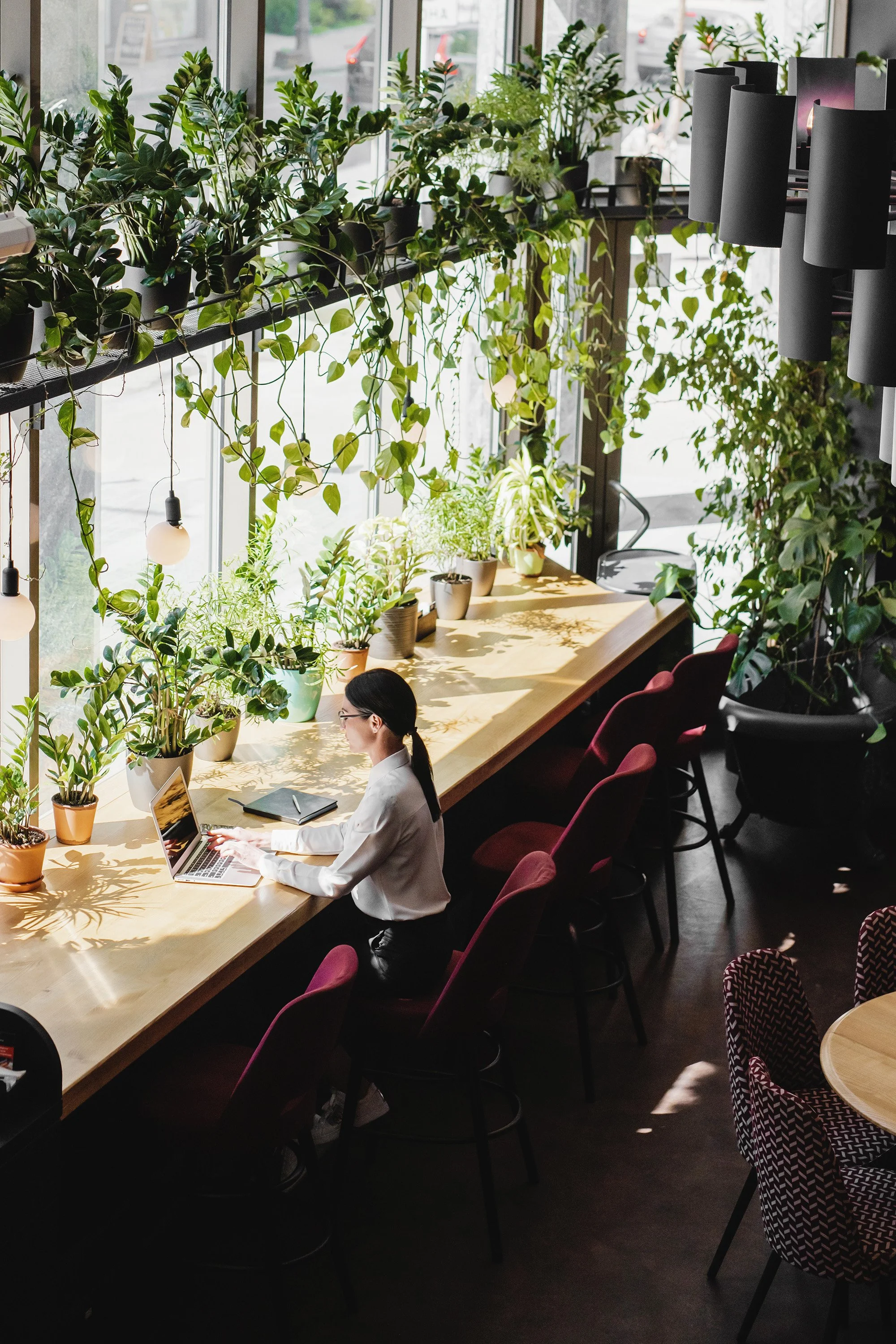
Not long ago, I completed an office plant installation in a corporate workspace that had a lot of beautiful natural light, but felt surprisingly sterile when I first visited. The space was clean and modern, but it didn’t quite inspire people to pause or gather. Through thoughtful indoor plant styling, we introduced living plants throughout the office, taller statement plants in empty corners, trailing plants softening shelving, and a few focal plants near the entrance. The goal was to create a sense of rhythm and bring natural energy into the workspace.
When I returned a few weeks later for a follow-up visit, employees were naturally gathering in the areas near the plants for conversations and breaks. One person mentioned that the office suddenly felt “more alive.” Moments like that are small, but they’re powerful reminders that plants shape how people experience a space, and how much power that space has in how we feel and operate as humans!
Research is finding particularly compelling benefits in healthcare environments as well. Several studies included in the review found that introducing biophilic design elements into hospitals and clinical settings helped reduce anxiety among patients and created calmer atmospheres for both patients and staff. Plants have often been treated as the finishing touch in a room. Something that is added after the design is complete. Research like this, suggests they deserve a more intentional role in how environments are planned! Thoughtful commercial plant design takes into account visibility, scale, texture, and the emotional tone plants bring into a space. The right placement can draw the eye, soften the space, and create moments of calm within busy environments.
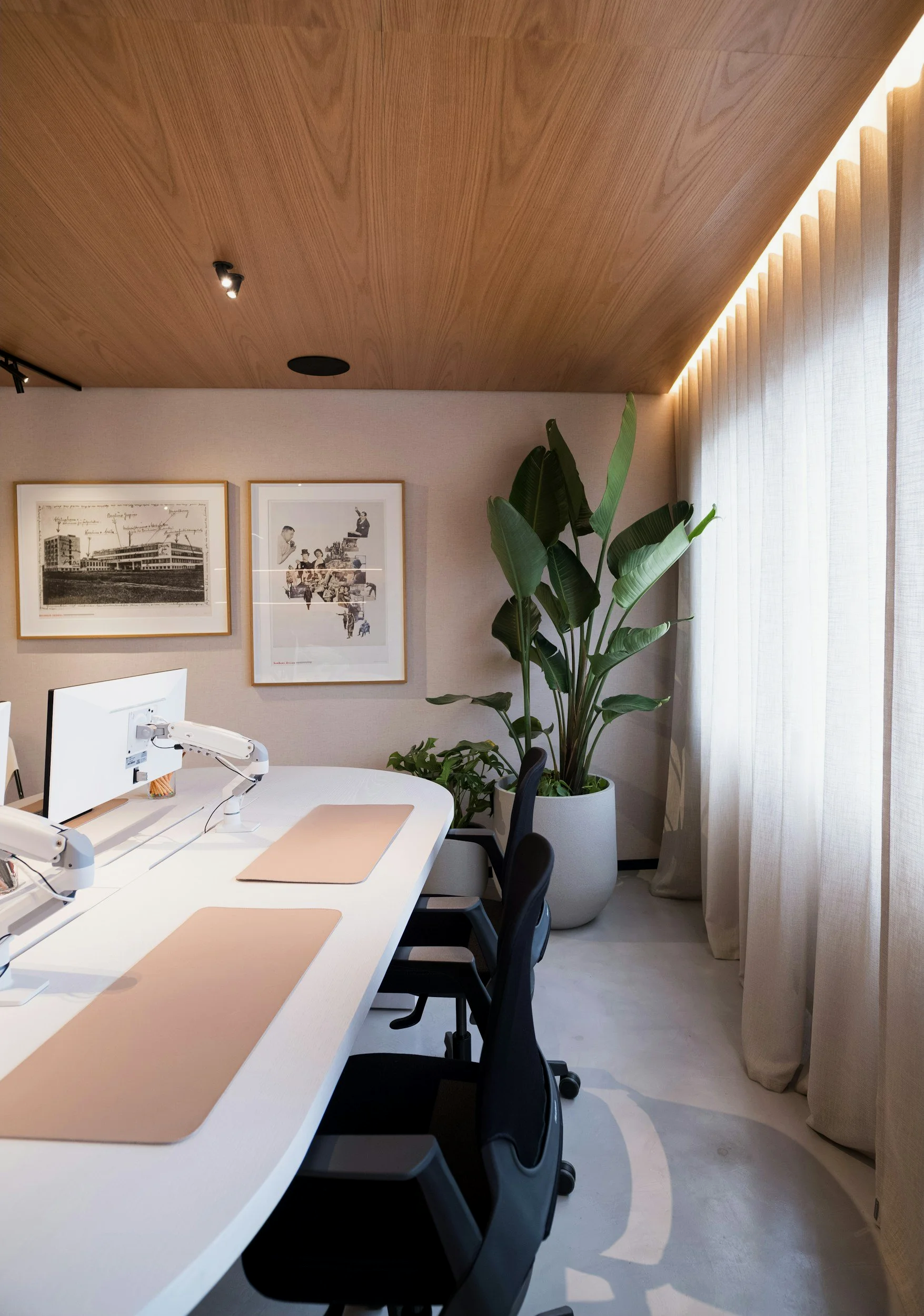
In other words, plants are not just visual elements. They influence how people feel, interact, and recharge throughout their day.
What continues to fascinate me is that humans seem to respond to plants almost instinctively. Even in highly controlled environments, places far removed from forests, gardens, or wild landscapes, the presence of greenery reconnects us with something deeply familiar. Maybe that’s because, biologically speaking, we are still wired for nature. Research like this doesn’t just validate the role of plants in design. It reminds us that the environments we create shape how people feel, think, and recover.
Bringing plants indoors is one small but powerful way of designing spaces that feel more human. And for those of us working in indoor plant design in Toronto and the GTA, it’s a beautiful reminder that plants are doing far more than decorating a room. They’re helping people feel better in the places they spend the most of their time!